

Ep. 6: I See Shit In Your Future


Welcome back to The New New Shit. In the last episode, we looked at a number of examples that show consistent patterns between the way we are dealing with carbon dioxide shit in our atmosphere and the way prior generations of humans dealt with shit in their water. In this post, I’ll make some predictions for the future, assuming we continue to follow those patterns.
Fair warning: this may be a difficult read for some of you. If you hear me out, I hope you’ll come away with a sense for how human societies might realistically adapt to a new climate. Personally, it’s been sobering for me to research and write this post, but I do feel bolstered by the knowledge that humankind has dealt with large systemic shit shows in the past and confidence that we will do it again when it comes to carbon dioxide shit. And to those of you who wish to break historical patterns: I hope you glean some insights into what you’re up against and find potential leverage points for influence.

Prediction: Widespread public readiness for action may be driven by 1% global death rate within a generation
If humankind behaves like we did in the 1800’s with the Cholera epidemics, then I think we should brace ourselves for tens-of-millions of climate-related fatalities. I personally think it’s sad and morbid to spell out the logic of this prediction, but it carries a necessary point I wish to make. As climate change proceeds, the world will continue getting hit with so-called “Thousand Year” heatwaves, crop failures, and floods (that have only historically happened once in a thousand years, but are actually starting to happen every year due to climate change).

If 3 million people around the world were to perish each year from these events, then within a 30 year moving window, 90 million people — representing around 1% of the average global population over the coming decades — would have been fatally affected by climate change. If/when we reach that point, every living adult at that time would be likely to directly know at least one person who has died due to climate-related events.
This brutally grotesque logic of “at least 1% total death rate within a 30 year window” has driven other large scale societal interventions from measles vaccines** to modern sewers. Climate fatalities driven by carbon dioxide shit have not yet reached this order of magnitude in any region of the planet.
I personally hope to be proven wrong on this prediction. I am not saying that this grisly pattern of human behavior is good or justified or that it must happen. However, it is a clear pattern that all of us can examine in our history of managing shit and I therefore would not be surprised to see this pattern repeated again for carbon dioxide shit.
Prediction: Public demands will mostly focus on relieving symptoms of shit; we will need wise leaders to address shit cleanup directly
In the case of the London sewer modernization project, even with over 1% of London’s population dead from Cholera within the preceding 30 years and the Great Stink of 1858 in their nostrils, Parliament still hotly debated whether or not to create funding for a new sewer system. Thanks to the British Parliament’s scrupulous record keeping, we can see that the debate was almost entirely about alleviating surface-level symptoms. Words like “stench”, “bad smell”, and “odor” appear throughout the Parliamentary transcript. Whereas “cholera” was only mentioned once. And “germs” or “Germ Theory” (the leading scientific theory on cause of Cholera at the time) were not discussed at all.
Ultimately, Sir Joseph Bazalgette, the Chief Engineer of London’s sewer modernization project, was charged with cleaning up the shit in the River Thames. He chose to go beyond that smelly mandate and, with great wisdom, Bazalgette carefully implemented the project to keep sewage and drinking water channels separate from each other throughout 1,100 miles of new channel construction. That genius design feature was responsible for not only alleviating the stink of shit but also providing clean drinking water, thereby saving countless future lives from Cholera infection and death.
I find Bazalgette’s design very interesting both as a technological system but also as a historical inflection point in public health. By the time Bazalgette was making his designs, medical scientists had been pressing the need for clean drinking water for nearly a decade. Perhaps his designs were influenced indirectly by hearing about the new “germ theory” of disease? Or perhaps just from simple instinct and personal experience of the Great Stink of 1858, he intuitively knew to isolate raw sewage, the stinkiest shit, away from everything else? Either way, the sewage and sanitation project that Bazalgette lead wound up addressing BOTH the surface-level symptoms of stinky shit in the London section of River Thames -and- the underlying hidden spread of bacteria that caused so many Cholera deaths. I think this type of local-and-systemic solution design thinking is going to be crucial for dealing with carbon dioxide shit.
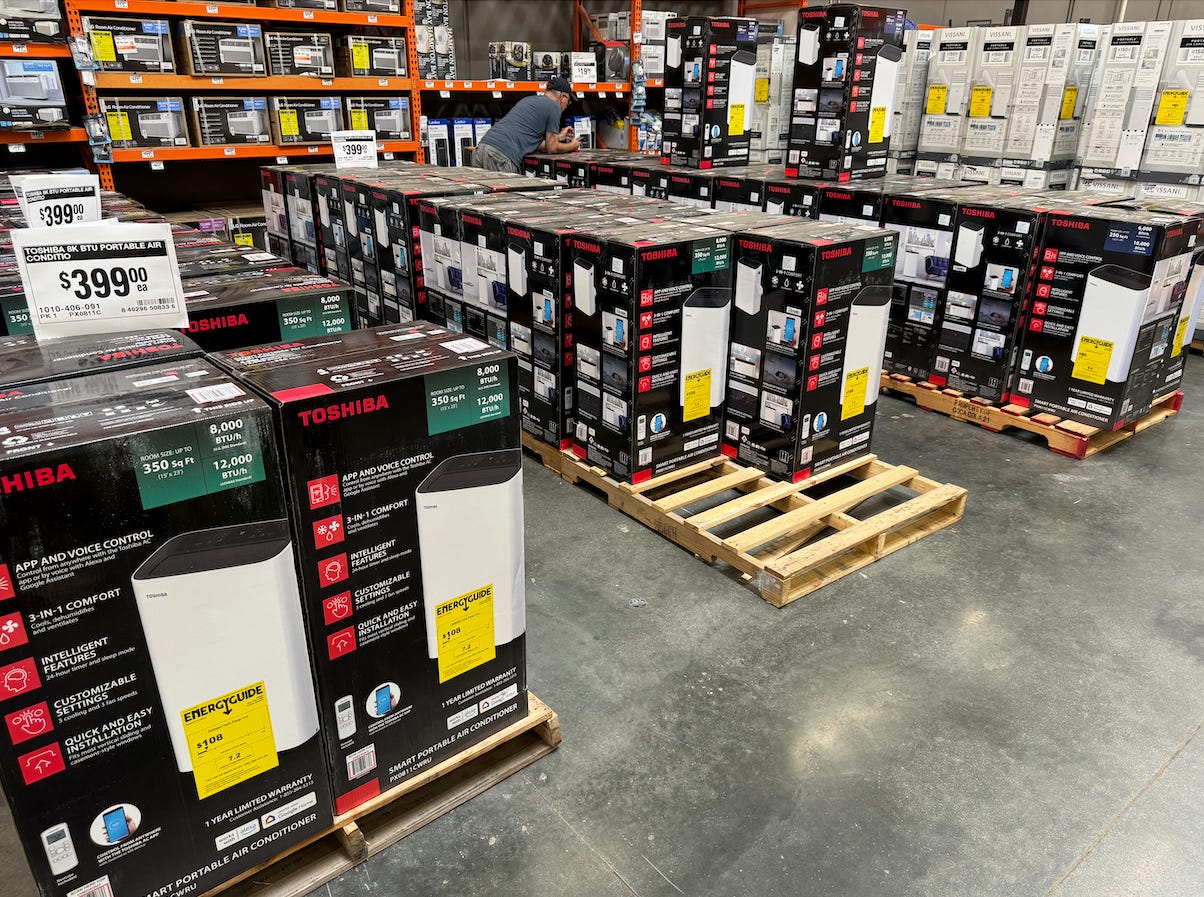
We can expect that future public attention will be focused on millions of deaths caused by heatwaves, floods, and extreme weather. It is likely that engineers in different regions will be charged with addressing these surface-level symptoms of carbon dioxide shit overload. Doubtless, we will see public and governmental demands for interventions such as “financial aid for air conditioners” or “digging tunnels for heat shelters” and “build higher levies.”
To be clear, I have nothing against people installing air conditioners and digging tunnel shelters (we’ll discuss these topics in future posts), but I do hope that we accomplish more than just treat surface-level symptoms. I am hopeful that, when the time comes, bright and wise future engineers will find many elegant solutions that will alleviate local symptoms as well as address the root causes of our excess CO2 shit.
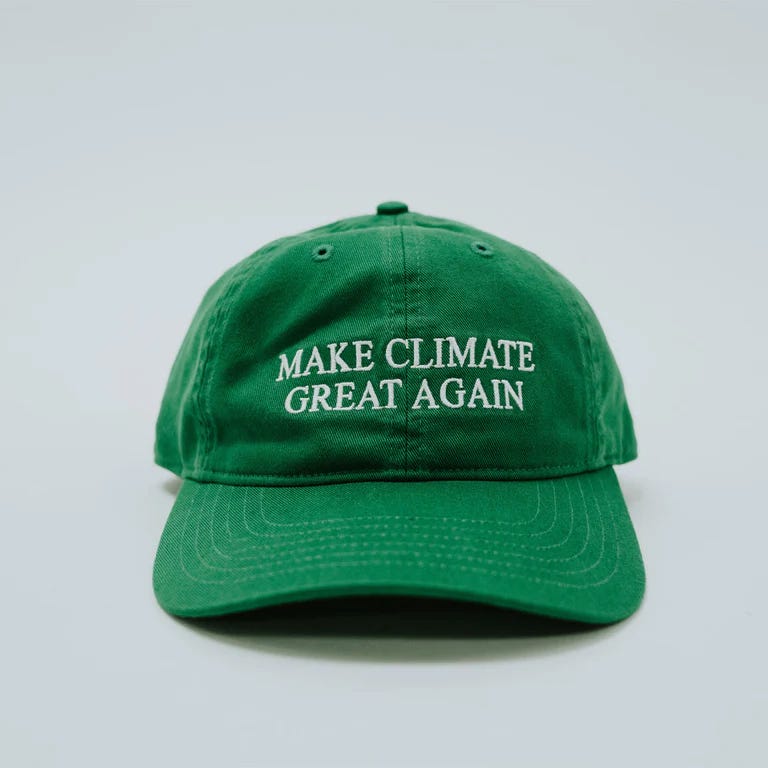
I’m sure there are many potentially elegant solutions waiting to be invented and implemented — ways to keep people cool, shore up lands against floods, and provide food for famine-stricken areas -AND- directly absorb carbon dioxide shit out of the ecosphere. Trees and forests immediately come to mind as a nature-based solutions that can simultaneously do all those things. Coral reef restorations, mangrove stands, and kelp farming may also be possible nature-based solutions that block storm surges and increase food security while also absorbing CO2.
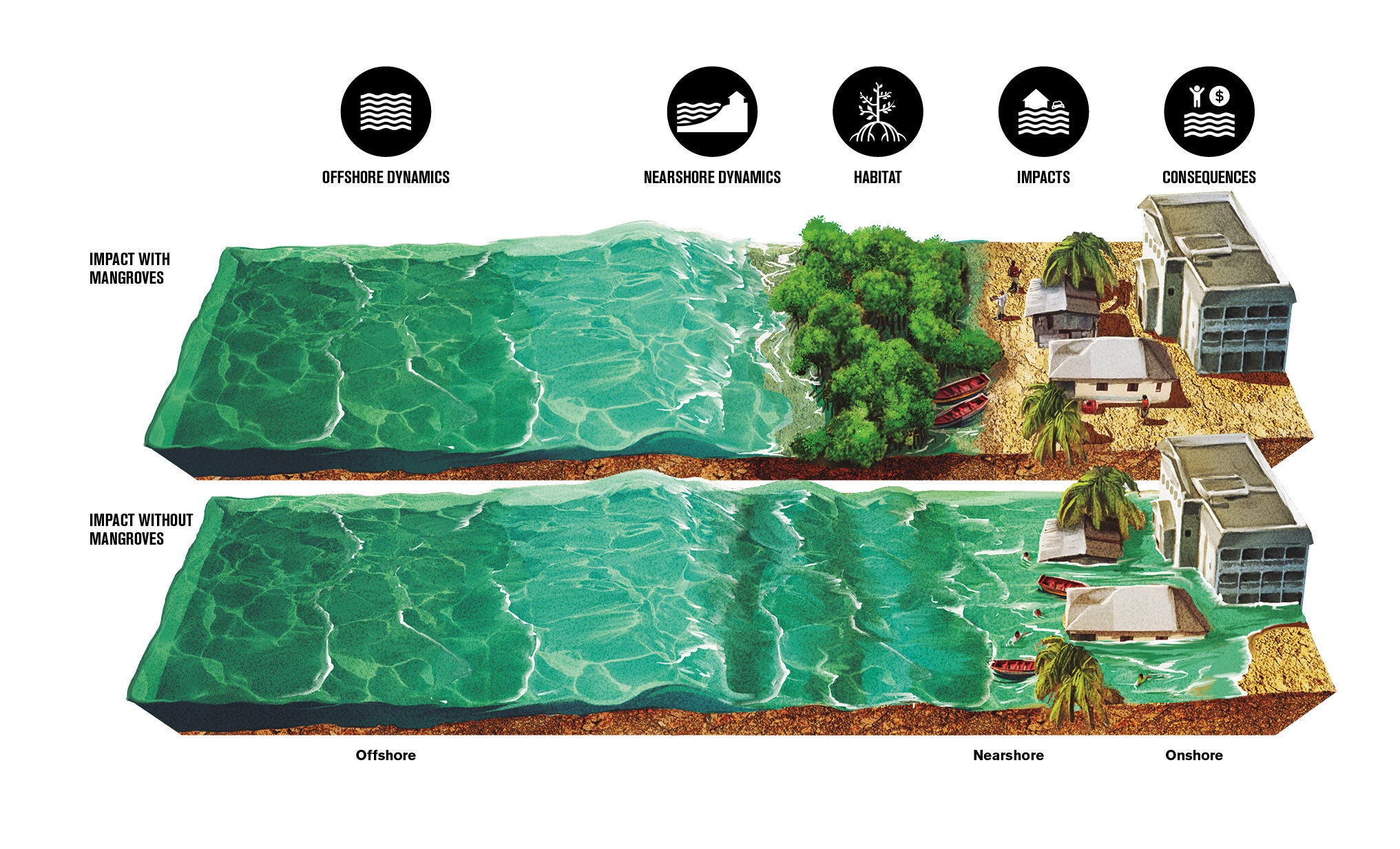
I can imagine technological solutions that could do the same as well — e.g., how about large elevated solar panel arrays that provide cooling shade for coastal cities and electrical power for large-scale seawater desalination plants that produce potable water for people and salty effluent to dump into the North Atlantic to keep the AMOC current flowing? Or what if we make some nanoscale materials science breakthroughs that allow us to connect thermoelectric power generation to Direct Air Carbon Capture (DACC) processes in a way that pulls both heat and CO2 out of the local atmosphere at the same time?
These may just be pipedream concepts right now, but I predict that a couple hundred years from now, all human societies will have implemented one or more of these local-symptoms-and-systemic-CO2 solutions. People in that age won’t even think of these things as “special solutions” — they’ll just assume they’re a fundamental part of daily life and basic infrastructure. No more remarkable than flushing a toilet or drinking from a faucet would be to people today.
Prediction: Annual investment in cleaning up carbon dioxide shit will grow over time to at least 3% of GDP
As noted in the last episode, the world’s governments and corporations have been investing over $1.3 trillion each year into climate and sustainability initiatives. That’s around 1% of global GDP. Most of these investments over the last decade have gone into renewable energy and transportation efficiency. 2023 actually marks the first time solar, wind, and hydro-generation combined produced more electricity than fossil fuels in the EU and UK. That’s an important milestone, showing that some regions are starting to reduce the amount of CO2 shit they’re dumping each year. Simultaneously, billions have also been invested by ag and commodities corporations into sustainable supply chains – including regenerative agriculture to improve biodiversity and soil health, which then promotes soil-based carbon sequestration, absorbing shit out of the air and locking it away in the ground. All of that spending represents a clear upward trend in spending.
We’ve seen a parallel trend in spending on cleaning up human excrement shit and all the shit we throw away. The City of London has been a forerunner in this upward spending trajectory and the rest of the world is following the trend. So if you look at our history of cleaning up shit, we’ve all seen this movie before and we know where the plot is going. I believe annual spending on cleaning up CO2 shit will grow from 1% towards 3% of global GDP over the next century.

Speaking of long time durations, I am going to wrap up this post by going out on a limb to make a very long term future prediction…
Prediction: All this carbon dioxide shit will take centuries to clean up
Given our history of dealing with shit, I think we can predict that the on-going political and economic debate about the cost of cleaning up our carbon dioxide shit is likely to continue for many more years. Meanwhile, the symptoms of carbon dioxide shit piling up everywhere will start to affect vital parts of society like agricultural food production, water supply, and property losses due to fires and floods. Just as the debate about how to deal with human excrement grew in intensity as the effects became lethal, I think we should anticipate that the struggle for control over climate policies will grow sharper as climate impact becomes more dire. Certainly, we have plenty of historical examples of countries under economic and sovereignty pressure that tend to become more nationalist and populist, rather than globalist and collaborative.
Lots of arguing stakeholders will inevitably result in different regions and industries taking a variety of strategies at unequal paces. We are already starting to see lumpiness and disparities in action appear between countries. As of June 2024, there are only 8 countries in the world – Bhutan, Suriname, Panama, Gabon, Guyana, Comoros, Madagascar, and Niue – that have found a way to completely re-absorb all the carbon dioxide that they produce. These carbon-neutral countries represent about 0.5% (half a percent) of the world’s population and most of them are covered in forests. Of the 195 countries on our planet, none have completely stopped relying on fossil fuels for energy, logistics, and manufacturing. Belize is the only country that has banned fossil fuel exploration and production within its borders and even it continues to import fossil fuels to power its society. Most countries (though, not all) and many major corporations (again, not all) have plans to achieve carbon-neutral status by 2040 or 2050.
All of this means that, even in the very best case scenario, total human-generated carbon emissions will still continue to rise until at least 2045. In less aggressive scenarios, it could take until the turn of next century before we stop emitting more carbon dioxide than we absorb. Even if we reach “Net Zero” (emitting exactly as much carbon dioxide each year as we re-absorb), we’re still not done with CO2-driven climate change. Human societies have already dumped about 2 teratons (two million-million tons) of carbon dioxide shit into the world. So heatwaves and floods will continue to worsen and impact human lives until those teratons are cleaned up.
If we’re optimistic and imagine that human societies are able to go beyond Net Zero carbon, re-absorbing more tons of carbon dioxide each year than we emit. (E.g., “negative emissions.”) Picture this: someday we create the capacity to re-absorb 35 to 40 gigatons (billion tons) of carbon dioxide shit each year. That would be as much CO2 shit as human societies are currently dumping into the atmosphere each year now. In order to do that, we will build a gigantic global carbon-shit-absorbing eco-industrial complex that’s as big and powerful as all of our current-day oil & gas powered industries — all added up together. Even if we manage to attain 40 gigatons per year pace of carbon sequestration capacity, it will STILL take another half century to reabsorb the 2,000 gigatons of dumped CO2 that got us into this mess in the first place. And then after that, we’ll need to wait with fingers crossed for a few more decades for the planet’s climate to re-establish an equilibrium. To crown it all off, after ALL that’s done, then we will still be left hoping and praying that the new equilibrium is pretty close to the “original” climate we had in the 1800’s or 1900’s!
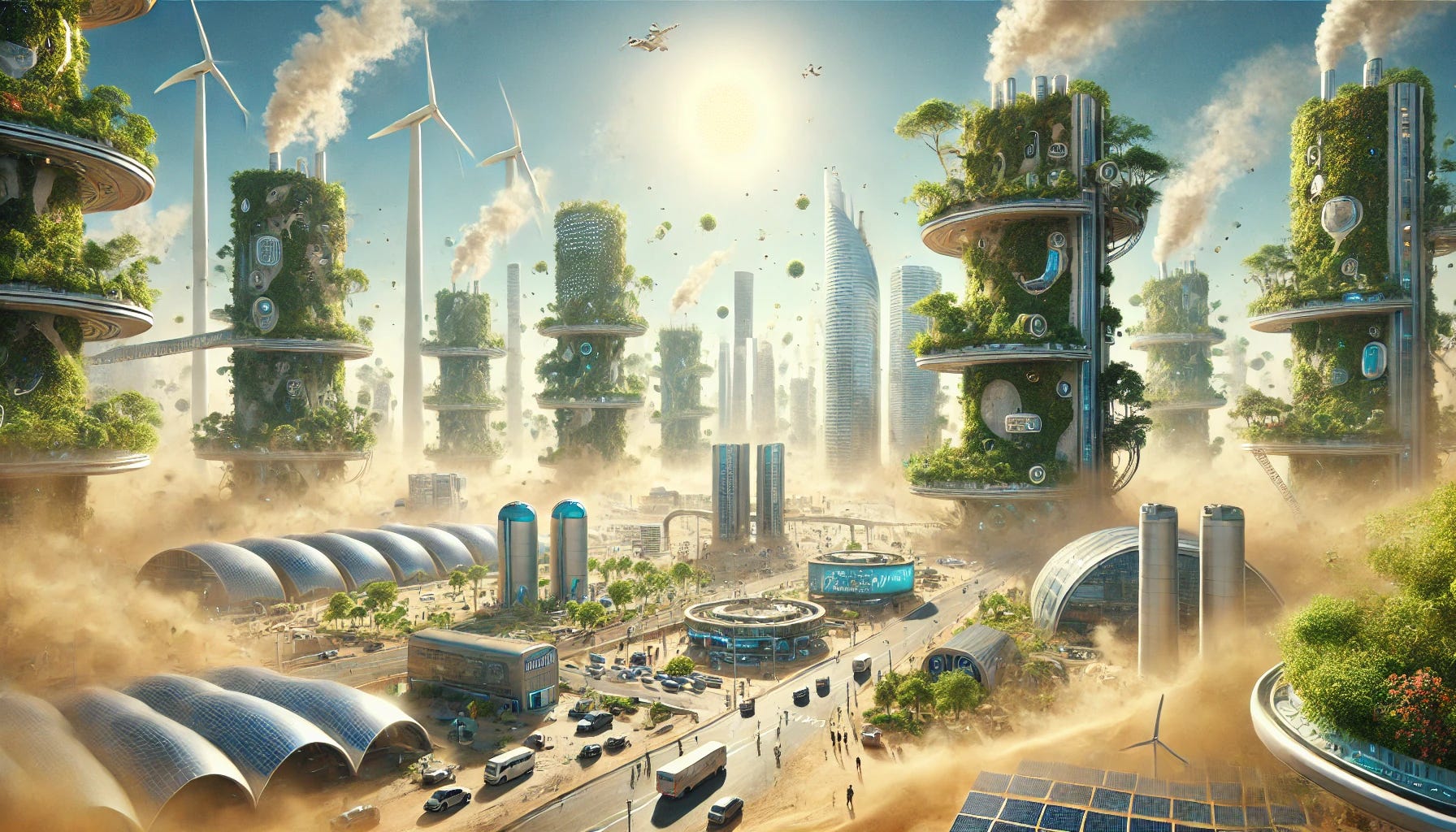
Whew. That’s a whole lot of optimistic assumptions and ideas that we have to buy into… all just to MAYBE have a chance at re-establishing the climate we had in pre-Industrial days. Let’s come back to reality now and re-examine historical parallels…
It’s been a couple centuries since the introduction of the first modern municipal sewage and sanitation system and we have still not dealt safely with 100% of the human excrement shit that we produce. To this day, 3.5 billion people still live near open sewers! I don’t think any of us should be surprised if cleaning up our carbon dioxide shit takes just as long or longer. I believe we are at the beginning now of a protracted CO2 cleanup effort that will take multiple centuries and will not likely return us to 1800’s or 1900’s climate.
Earth’s climate will inevitably be changed, there’s no averting it.
Even after multiple centuries of CO2 shit cleanup, the planet’s climate will still not return to “normal” that you or I may have grown up with and maybe never will. But just because things won’t stay the same does not spell doom for humanity. Many generations of humans will be born, grow old, and pass on during this half-millenium of climate shift ahead of us. Future societies will have a different definition of what “normal” climate means. Our human cities and nations will react to the conditions that they find themselves in and we’ll adapt to a new normal that is warmer on average than today. We will likely go through a generation of immense tragic suffering when millions of climate-related deaths happen every year, but then we will engineer and grow solutions to prevent that fatality rate from happening again.
Cleaning up any kind of shit is never just a physical or technical challenge. It’s a social, economic, and political balancing act. We have always adapted this way when it comes to dealing with shit and I’m pretty sure we will do it again in the centuries ahead.
So, buckle up folks: we’ll have a lot more shit to talk about, for a long time to come, on The New New Shit.
**= Before the introduction of measles vaccines in 1963, measles claimed over 2 million lives each year. Over a period of 30 years, that would add up to a total death toll of over 60 million people. Compared to the world population of 3 billion in the 1960’s, that was equivalent to 2% of the total human population dying within a 30 year moving window. Odds are that nearly every living adult in 1963 directly knew someone who had died from measles and that must have driven urgent public demand for action. The measles vaccine became a routine part of children’s immunizations in the United States in 1963, shortly after its development. It was widely adopted into childhood immunization programs globally across almost all countries in under 30 years.