

Ep. 2: Modern Shit

In my last post about Medieval Shit, we discussed human history of shit piling up in cities for over two thousand years. By the mid-1800’s, with multiple cities reaching 1 million population and serious public health crises erupting from cities literally swimming in their own shit, conditions were ripe for modernization. It took two major historical events that happened in London to trigger the creation of the world’s first “modern” sewage and sanitation system.
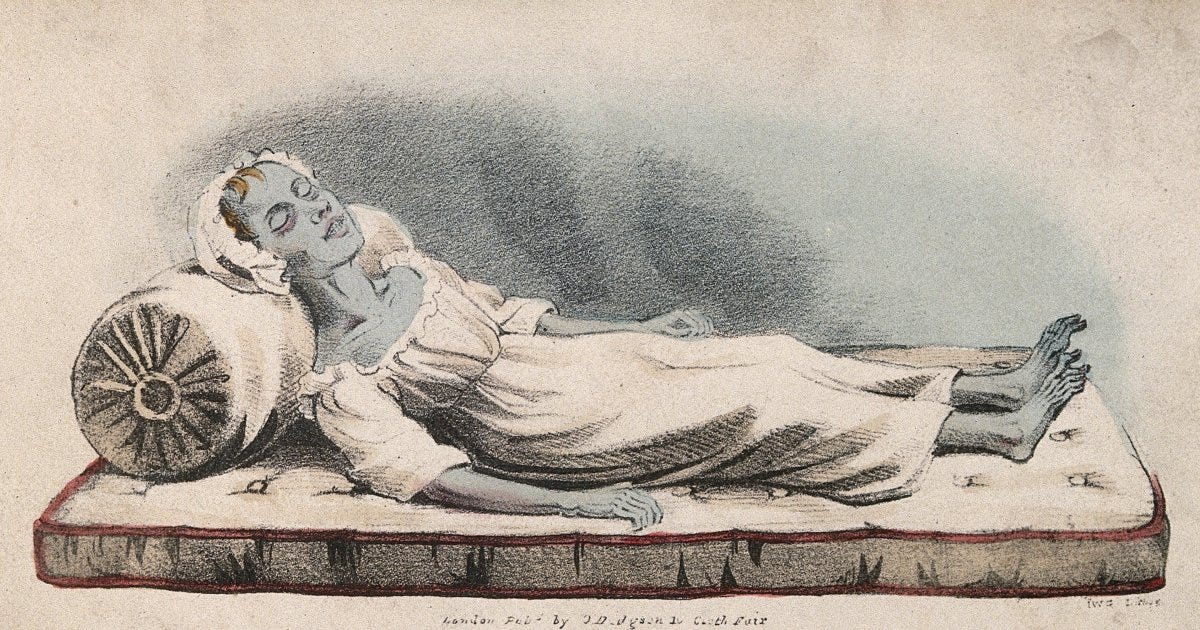
First, London suffered a series of massive Cholera Epidemics between 1831 and 1866 that infected hundreds of thousands of people and killed tens of thousands. Cholera was a new bacterial disease that had just arrived in London after spreading from South Asia. It was a particularly fast-spreading and deadly new disease that caused widespread panic and disruption to daily life. A large percentage of the city was infected and over 1%** of the entire population — more than 10 times the average historical fatality rate from dysentery and typhoid! — died in under 30 years through multiple epidemic outbreaks.
All of these deaths drove Londoners to panic and motivated careful study by medical practitioners. In 1854, an epidemiologist, Dr. John Snow, mapped the cases of cholera and identified a pattern centered around a public water pump on Broad Street (now Broadwick Street). Snow’s detailed map showed a clear concentration of cases around this pump, leading him to hypothesize that the cholera was being spread through the contaminated water from this source. He was able to have the handle of the public water pump removed by city authorities and, indeed, the number of cholera cases in that vicinity decreased.
Unfortunately, this new scientific knowledge about the linkage of cholera and contaminated water supply was not sufficient by itself to drive immediate action. Dr. Snow’s medical findings were not fully understood and many members of the public were either not aware or did not believe his theories. It took four more years of epidemic deaths before a second major event finally tipped the city into action: The Great Stink of 1858.

The Great Stink happened in London as the hot Summer weather of 1858 magnified the smell of untreated human waste and industrial effluent that had accumulated on the banks of the River Thames. The stench of the river was so bad that members of Parliament were reportedly unable to utilize the Committee Room and the Library. These conditions drove an immediate debate amongst members or Parliament which resulted in an August vote that empowered the Metropolitan Board of Works to create a new sewer system. MBW were given a budget of £3M to be funded by a new 40 year tax on all London households. Bids for construction were put out the following year and construction on the main part of 1,100 miles of new sewer was completed just 7 years later in 1865. It’s amazing what results society gets once the powers-that-be are directly affected by a problem!
London’s new sewer system was a marvel of civil engineering and has become widely regarded as the first modern sewage and sanitation system. The key features of the new system included:
Separation of drinking water supply from sewage-carrying waterways
Drainage of sewage into areas of the Thames estuary far downstream from London
Collection of raw sewage into early treatment facilities (sedimentation ponds, in this case) before final drainage into the Thames estuary
It’s important to note that even with the majority of Parliament and the Prime Minister backing the new sewer plan, it was not a universally popular idea. There was political, financial and public resistance to sewer modernization. Many politicians and members of the public were concerned about the high costs associated with the construction of the sewer system. Securing funding for such an ambitious project was a major hurdle. There was also resistance from vested interests, such as those in the water supply companies who might have faced additional regulations or competition. And although Dr. John Snow’s work had established a link between contaminated water and cholera by the 1850s, there was still a lack of widespread acceptance of the germ theory of disease. Some politicians and members of the public were not fully convinced that the sewer system would effectively address the health issues facing London.
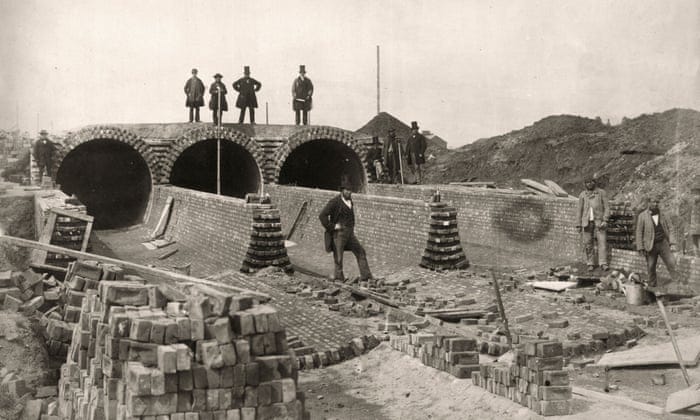
Ultimately, the new sewer system did improve water quality and sanitation management in London, but it did so essentially by moving the city’s shit further downstream. It wasn’t until a century later, between 1930 and 1990, when modern sewage treatment facilities were built to process biological, organic, nutrients, and other contaminants out of sewage before being discharged into the Thames estuary.
Other major cities in Europe quickly followed London’s example. The effects of million-person urban populations panicking about Cholera and simultaneously revolting against the stench of their own shit were a potent one-two punch that finally enabled the implementation of modern sewage and sanitation systems.
In Paris, the decisive factor in improved sanitation works for the city was the dictatorial desire of Napoleon III, who wanted to project the image of a polished, new, more modern France. Even smaller cities, like Chicago in the United States, began to implement modern sewage systems in the mid-1800’s. Similar to the larger cities of Europe, Chicago had also been overrun by a series of Cholera Epidemics (in roughly the same years as London’s outbreaks) that had killed over 2% of its population. After going through that horrific loss of life and seeing sewage pile up on the shores of Lake Michigan, Chicagoans undertook a famously ambitious sewer modernization project. The Chicago sewer upgrade is notable for the ingenious way engineers reversed the flow of the Chicago River so that it drains into the Des Moines River and the Mississippi Basin rather than into Lake Michigan, which is the city’s main source of drinking water.
It’s quite interesting to note that major cities in Asia and Africa lagged in their adoption of modern sewage systems until the 1900’s. Multiple cholera epidemics also killed tens of thousands of people at a time throughout global cities in the 1800’s. But, crucially, there was never a single dramatic pollution event like London’s Great Stink that affected the political or economic power-class of East Asian or African cities. Instead, recurring public health crises and the growing recognition of the need for improved sanitation eventually led to the development of modern sewer systems and other public health infrastructure improvements throughout global cities in the 20th century.
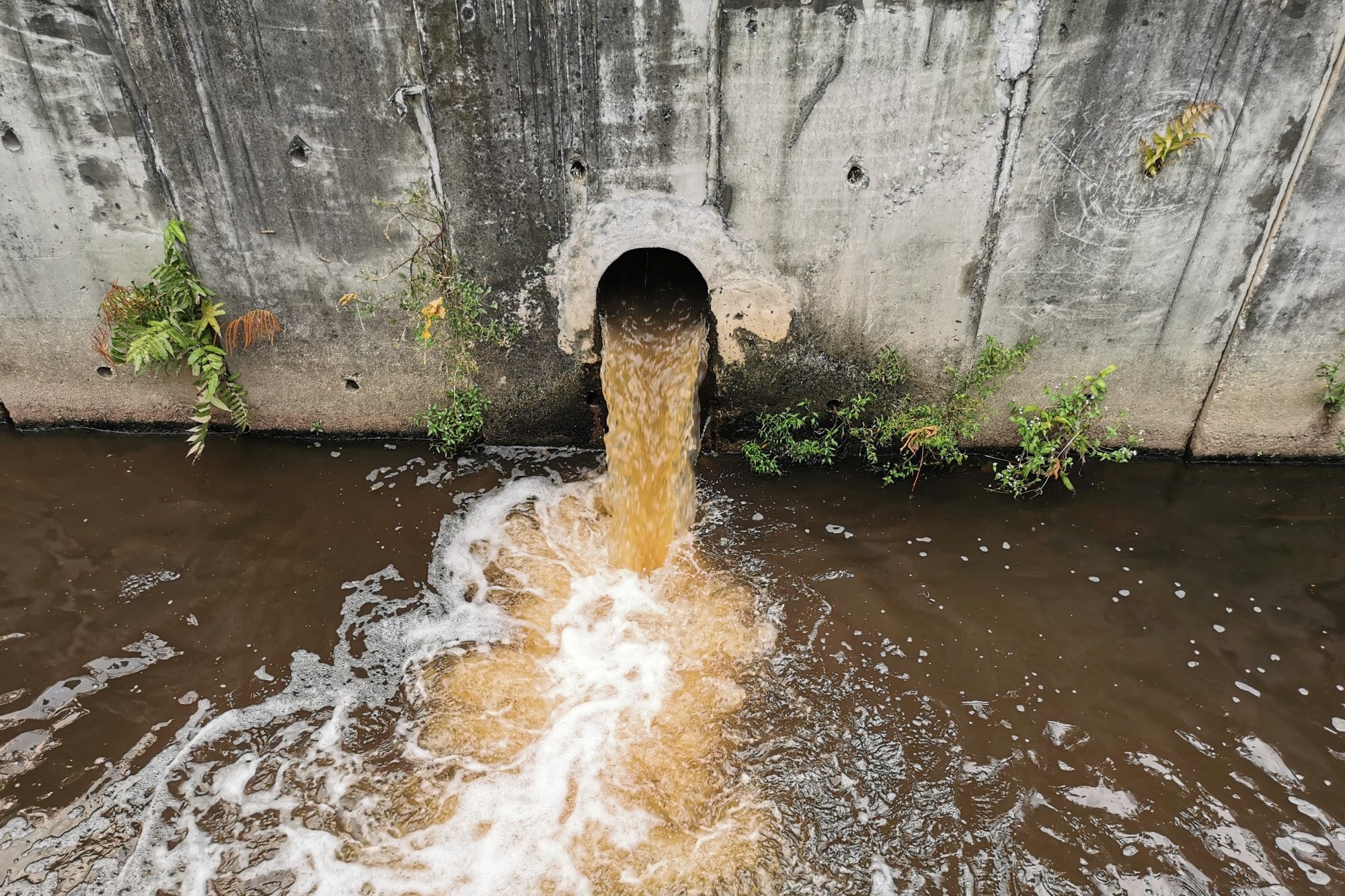
To this day, the World Bank estimates that globally 3.5 billion people still lack access to safely managed sanitation services. Around the world, 2.4 billion people gained access to modern toilets or latrines for the first time between 2000 and 2020 — just in the last couple decades! However, sanitation is not just a developing economy issue. London may have been the first city to implement a modern sewage system, but the city continues to struggle with its shit. Even as recently as March 2024, raw sewage levels in the River Thames were so high that competitors in the famed annual rowing Boat Races between Oxford and Cambridge universities had to be warned against entering the water.
There are some important meta themes that emerge from this quick traverse through history.
Large numbers of people are willing to live with shit literally piled up right outside their homes for thousands of years. Humanity seems to have an incredible tolerance for putting up with shit.
Societies seem to enact large-scale shit cleanup projects when two triggers happen together: (1) over 1% of a population dies because of the shit; and (2) authorities or people-in-power directly suffer from or have some other motivation (personal pride, national prestige, etc.) to care about the shit.
Greater than 1% death rate of a population seems to be a threshold for attention. A long term trend of many fatal events caused by shit can gradually drive a population to clean it up. But in the short term, a single severe fatal crisis seems to drive hysteria and debate rather than action.
Medical or scientific information about public health risks, by themselves, do not seem to drive full-scale action.
Even after adoption of new plans, many different factions are likely to resist shit cleanup for political control, financial budget, and commercial competition; or simply out of doubt about efficacy.
When action does happen, shit tends to just get moved downstream. City governments and private citizens tend to take the smallest actions possible to solve their immediate local shit and will leave systemic cleanups for someone else to deal with in the next century.
Cities and regions around the world do not act in unison; there can be very significant delays (centuries!) between different cities in adoption of best practices for managing shit.
I’m not here to say if these themes are good or bad or ought to change or stay the same. In this newsletter, I am trying to put forward factual observations of how large numbers of people seem to have behaved in the past. These behavioral patterns seem to recur in different places throughout history, even when people have been faced with the most obvious and pressing evidence of the waste from their livelihoods and lifestyles: their own shit literally clogging their local water sources.
I do think that it’s important for everyone to understand these historical observations because they may inform us all about how our global population will take action (or not) when facing current and future situations related to management of wastes and effluents. This understanding can help us correctly recognize the type of challenges we’re facing when we see them. We will explore these themes more in future installments of The New New Shit.
**= London average population between 1830 and 1860 was around 2.4 million souls. Over 35,000 perished in Cholera Epidemics during those decades, a death rate of nearly 1.5% of the population within 30 years time. It must have been terrifying to live in London at the time. With that many people dying within a single generation, every adult living in the city at the time very likely knew at least 1 person who had died suddenly from Cholera. Even so, the city almost doubled its population during those years due to industrialization and people crowding into London in search of employment.