

Ep. 1: Medieval Shit


The beginnings of waste management are rooted in a universal human instinct: “don’t shit where you sleep.” We have been cleaning up shit to keep it away from the places where we reside for as long as we’ve had human beings living together in settlements and cities.
I think it’s instructive for us to understand our history of managing the waste and byproducts of our livelihoods and lifestyles. History has a habit of repeating itself, so if we understand shit in the past, then we can better predict how shit will go down in the future. With that in mind, let’s dive into medieval and ancient times to understand the history and economics of how cities have dealt with the most offensive waste: human shit.
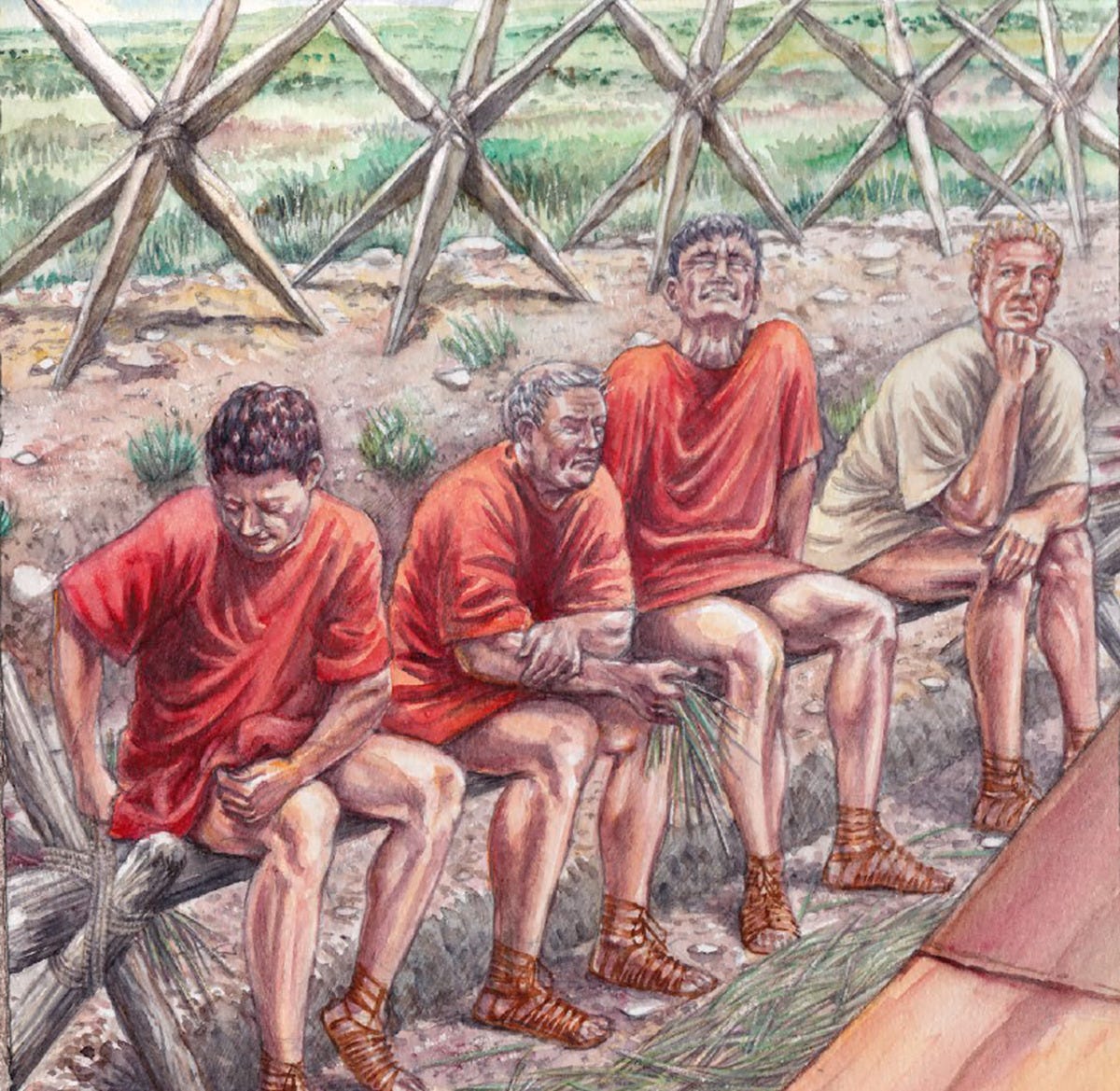
The ancients knew about the value of shit as a crop fertilizer. So, going out into a field of crops to take a shit was a fine sanitation solution for early agrarian civilizations. But once populations grew beyond the ability of farmers to utilize all their shit, people began transporting shit from their homes to communal rubbish dumping grounds or just throwing it into the street outside their homes. We know this because of the parasites found in old pieces of shit that people stepped in as they walked around ancient settlements.
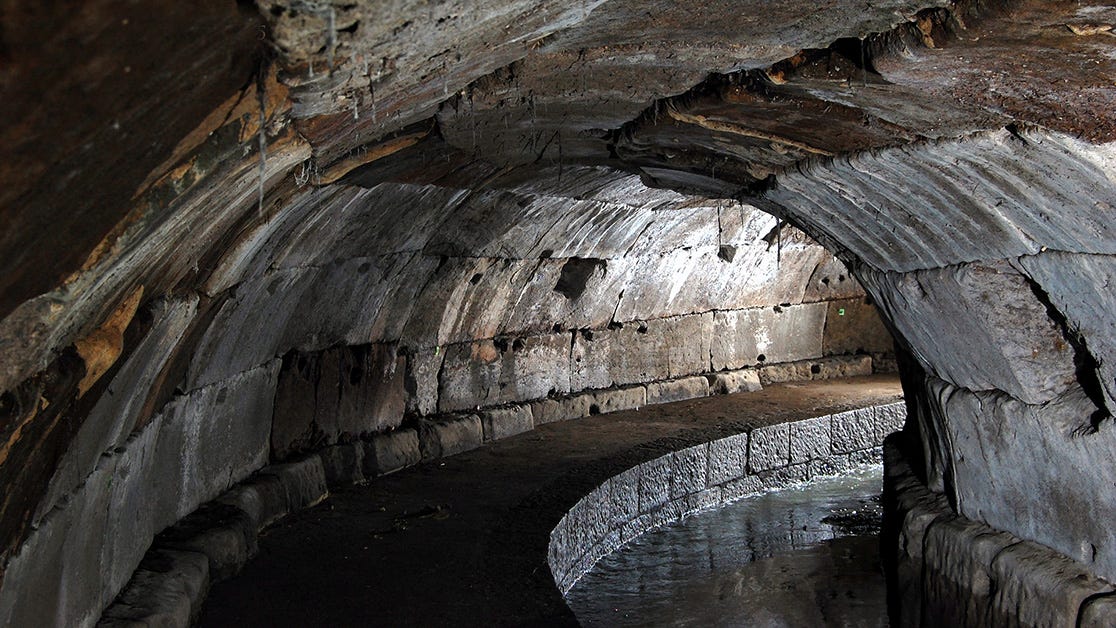
During the first century CE, South American civilizations such as the Moche and Nazca had thousands of people living in settlements with archaeological evidence of public and private latrines as well as underground aqueduct systems. Around 100 CE, the ancient Romans built an elaborate underground sewer system which still exists today that transported surface water to rivers. Interestingly, the Roman sewer (singular; there was ONE sewer channel for the entire city) was built for water transport, not human excrement. But that kind of makes sense if you think about it. In a city full of people dumping their shit in the street, it would be a really high priority to make sure that water never pools on the surface of city streets!
Also in that same ancient time period, the Han Dynasty in China was heavily influenced by the Confucian principles of cleanliness in daily life and rituals. As early as 200 CE, the Han Dynasty had issued legal edicts about maintaining public cleanliness and proper waste disposal. The Chinese also began employing sanitation workers known as “night soil men” who collected shit from homes and latrines during the night and transported it out of the city to farming fields.
These are just a few examples of people managing shit in ancient times. This was a universal and global imperative, quickly discovered by every human civilization around the world as soon as large numbers of people began living together in cities. People in every civilization around the world tended to dump shit in open gutters in the street. And every culture had a role similar to “night soil men” – sometimes referred to as “rakers” or “scavengers” who would move shit to nearby farms or rivers.
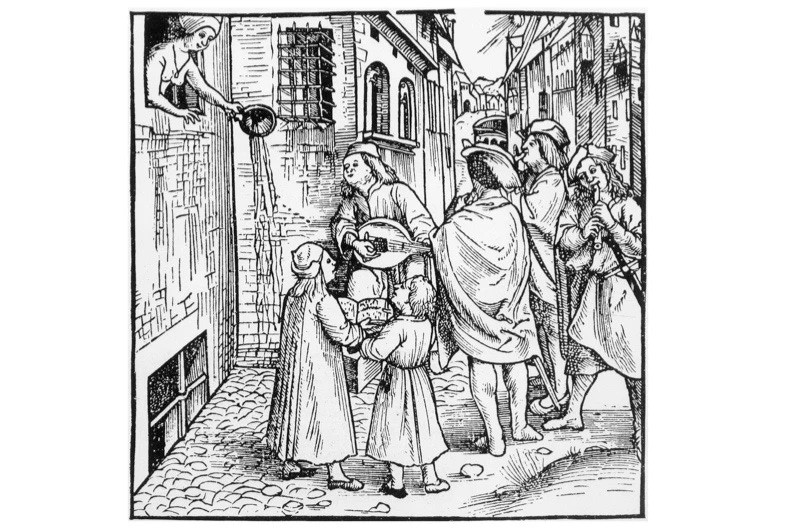
Fast forward 1,000 years past the Fall of Rome, through the Medieval Era to the High Middle Ages and we find that people in cities were still dumping shit in the streets. Around 1400 CE, in cities around the world from Song Dynasty China to Tuscan Italy to Incan Peru, people commonly used chamber pots to collect human waste, which were then emptied into the streets or nearby rivers and streams. Public and private latrines were common, but they often discharged directly into the streets or nearby bodies of water without any treatment. Many cities had open sewers or gutters running along the streets, where waste from households and workshops was dumped.
Waste often accumulated in streets and public spaces, leading to foul smells and unsanitary conditions. Streets were typically narrow and winding, making the disposal of waste more challenging. This often led to waste piling up in alleys and corners. Houses and buildings often had overhanging upper floors, which made streets even narrower and darker, contributing to the accumulation of waste and making cleaning more difficult. Open sewers would often overflow, especially during heavy rains.

Cities at that time were densely populated, with tens of thousands of people living in close quarters. Growing population density compounded urban sanitation problems. The concentrated accumulation of waste and the use of open sewers contributed to foul odors permeating cities. Rivers near cities became heavily polluted with waste.
Those same rivers were also sources of drinking water for cities and downstream areas. As urban populations drank contaminated water, they suffered frequent outbreaks of common waterborne bacterial diseases such as dysentery and typhoid fever. Historical medical records are hard to come by, but humans have encountered amoebas and the Shigella and Salmonella bacteria which cause dysentery and typhoid fever since evolutionary times. Estimated fatalities from dysentery and typhoid fever were around 0.1% (1 in a 1000) annual death rate among city populations at the time.
In the High Middle Ages, scientific knowledge was not yet advanced enough for people to understand the linkage between poor sanitation and deadly bacteria that killed 1 in every 1000 of their fellow city residents every year. But even without that, it was already apparent that cities were becoming really unpleasant, smelly places due to shit piling up. One might think that the people in them would be quite motivated to clean shit up, right?
Some cities did attempt to manage waste through regulations. London makes for a good example to study because of its large population and availability of historical data. As early as 1244, London – with a population at the time of around 50,000 – had become dirty enough that a legal document called “The London Eyre” referred to disposal of waste as a public nuisance and specified individual responsibility for maintaining the cleanliness of public spaces. By the mid 1300's, London had doubled in size to 100,000 population and accumulation of waste in the Thames was bad enough to have narrowed the river’s channel, hindering navigation. London authorities responded by issuing a series of ordinances called “The Assize of Nuisance” which forbade the disposal of waste into the Thames River and requiring householders to keep the area in front of their homes clean and clear of any obstructions.
Many other 14th century cities from Song Dynasty China, to Incan Cusco, to Great Zimbabwe, and Mamluk Cairo all have some historical evidence of sanitation practices and ordinances that attempted to manage shit being dumped in streets. The common theme across cities was: ordinances targeting putrid smells and disposal of dead animals and human waste away from residential areas and marketplaces.
Despite clear public awareness of public nuisance caused by shit, people still kept throwing shit into open sewers and it took almost 500 more years before modern sewage and sanitation systems began to be adopted and implemented in cities around the world. By this time, people in cities had been dumping shit in streets and shoveling it into the nearest rivers for over 2000 years.

The population of London reached 1 million people right around the year 1800. With that many people dumping shit in the streets and shoveling it into the River Thames, conditions were ripe for large scale sanitation issues. The next few decades would bring two watershed historical calamities to London that would reshape global public awareness of all this shit.
We’ll delve into how modern cities deal with this shit in the next newsletter.