

Ep. 10: Electronic Shit

Electronic waste, or e-waste, is one of humanity’s shittiest byproducts of the digital age. It’s what happens when the relentless churn of tech innovation—smartphones, laptops, flat screens, and a zillion other gadgets—collides with planned obsolescence and consumer appetite for upgrades. 💻📱✨ But all that glitzy innovation comes with a dark side: an estimated 50 million metric tons of e-waste are produced globally every year, making it the fastest-growing waste stream on the planet.
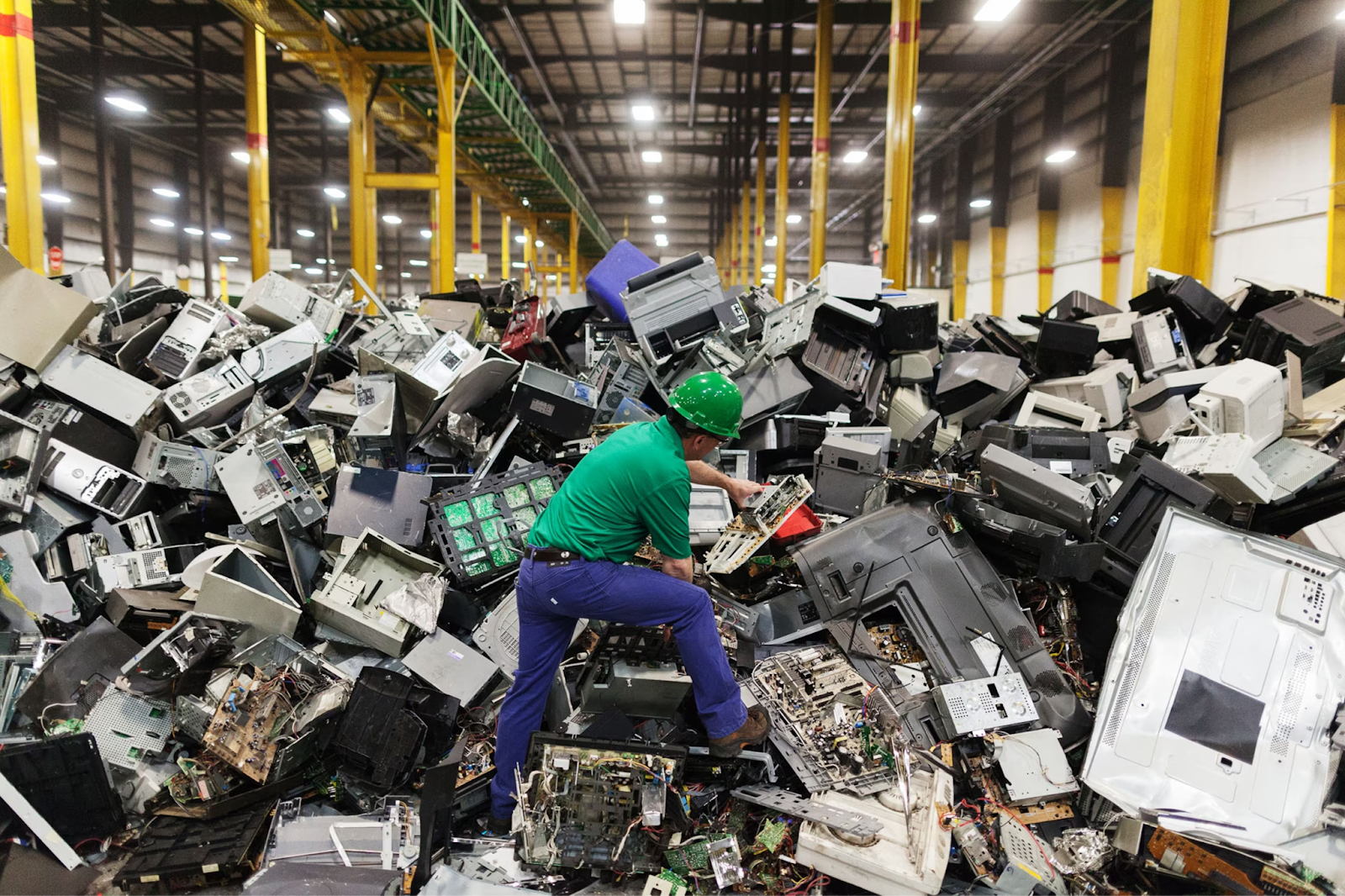
The first signs of e-waste showed up in the 20th century as electronic gadgets became common in households. By the 1990s, consumer tech exploded, but so did the garbage it created. Manufacturers pushed shiny new models while ignoring the growing piles of yesterday’s tech. Early recycling efforts were patchy at best, often exporting the problem to poorer countries.
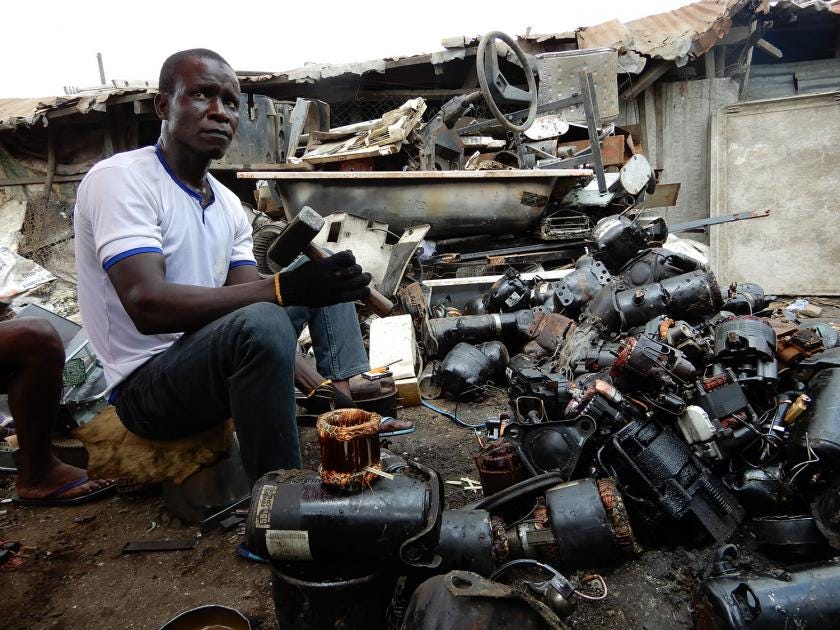
Right now, less than 20% of e-waste is properly recycled, while the rest ends up in landfills, incinerators, or informal recycling yards where people break down devices by hand, often exposing themselves to toxic chemicals like lead, mercury, and cadmium. These toxins don’t just stay put; they leach into groundwater, poison local environments, and bioaccumulate in the food chain. 🍲😬
China, India, and Nigeria are infamous for their e-waste dumps, receiving truckloads of cast-off gadgets from wealthier countries. Ironically, the same nations manufacturing new electronics are choking on the waste generated by their consumption.
Managing e-waste is big business, worth around $57 billion globally in 2023 and projected to grow at 7-10% annually. Leading companies in this sector include:
Sims Recycling Solutions (headquartered in the U.S. and Australia): A global company handling millions of tons of e-waste annually, with operations in over 20 countries.
Umicore (Belgium): A leader in metal recovery, turning old circuit boards into gold, silver, and palladium.
Tetronics (UK): Specializes in plasma arc recycling, a high-tech process that vaporizes toxic substances and recovers valuable metals.
Governments are also stepping up. The EU's Right to Repair laws and regulations like the WEEE Directive (Waste Electrical and Electronic Equipment) mandate manufacturers to take responsibility for their products’ end-of-life stages. Meanwhile, the U.S. lags, with patchwork state laws and no comprehensive federal e-waste policy.
The e-waste problem continues to increase in scale as our global dependence on electronics increases. We’re starting to develop new approaches to managing this waste stream…
Modular Tech: Companies like Framework are pioneering laptops designed to be upgraded instead of tossed. Imagine adding more RAM or replacing a broken screen without chucking the whole device. 🛠️
Urban Mining: New material and waste processing techniques can turn our old gadgets into literal treasure chests of rare minerals. By recovering precious metals from e-waste, companies are reducing the need for destructive mining practices.
Big Tech Accountability: Apple, Samsung, and Dell are under pressure to make greener products. Apple's recycling robot Daisy can disassemble 200 iPhones an hour, recovering rare materials like cobalt.
Consumer Awareness: Recycling programs like Best Buy’s drop-off centers or trade-in incentives are making it easier to dispose of old gadgets responsibly.
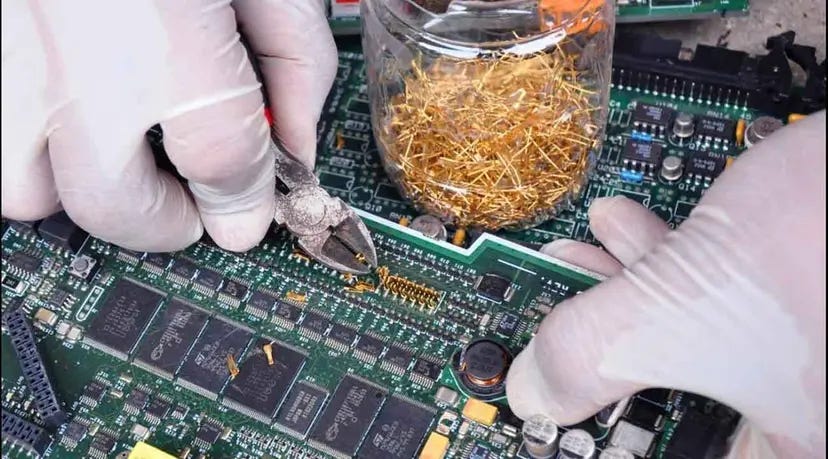
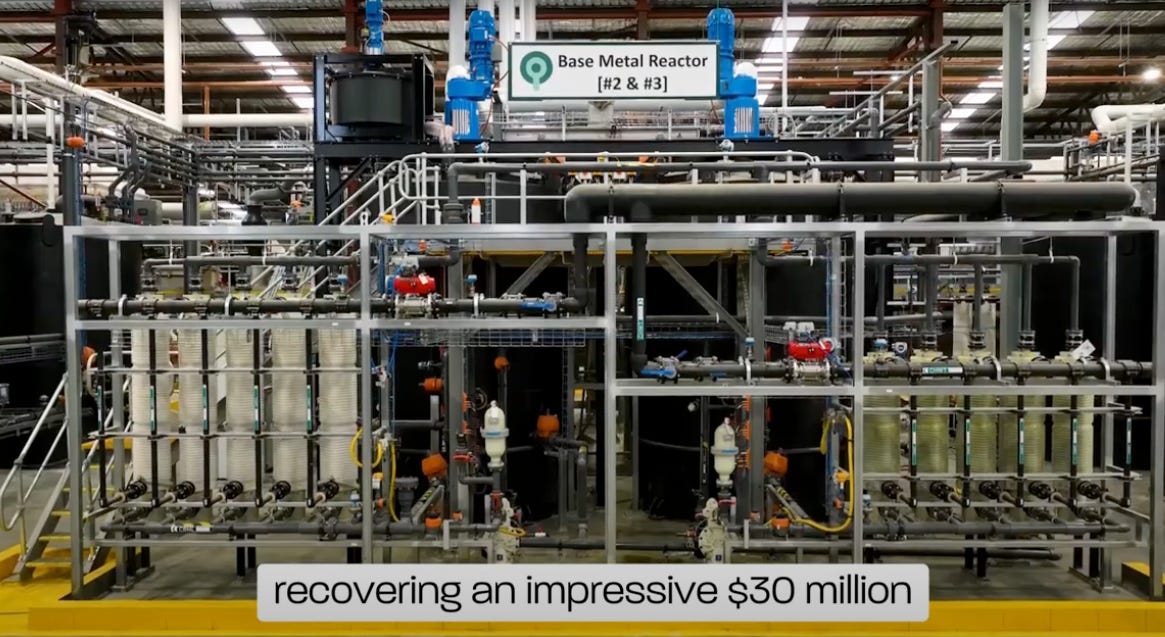
In particular, within these new approaches, Urban Mining has been a fast growing sector, with several companies leading in the recovery of valuable metals from e-waste. These firms leverage advanced recycling technologies and play a pivotal role in building a circular economy. Firms like Umicore in Belgium have figured out ways to process over 350,000 tons of e-waste annually. Their processes extract gold, silver, platinum, palladium, and other rare metals. Specialists like JX Nippon Mining & Metals in Japan focus on copper and precious metal recovery from circuit boards and industrial waste. JX operates some of the world’s most efficient smelting and refining facilities, combining traditional metal production with urban mining techniques. Some companies, like Mint Innovation in New Zealand are harnessing nature as part of the solution. They utilize microbes to recover gold and other metals, offering a green alternative to conventional recovery methods.
E-waste is a growing pile of shit—and not the good compostable kind. It’s a toxic cocktail of precious metals, plastic, and poisonous chemicals that’s expensive to manage but also a goldmine if done right. With the right tech, policies, and pressure, we might just turn this trash into treasure. 💩💎